Last updated November 18, 2026
 Sliding glass doors
 Single hung
 Double hung
 Horizontal roller
 Casement
 Bay & bow
 Entry doors
 Impact garage doors
 PGT
 CGI
Free in-home measure and quote - PGT, CGI and CWS impact lines compared on your actual openings, style by style
Get your free estimateWindows & Doors Emergency Preparedness Guide for Enterprise Homes
Most emergency prep advice you’ll find online was written for Florida or the Gulf Coast, and it assumes a hurricane is coming. That’s the wrong plan for Enterprise. The threats that actually reach your window seals and door thresholds here are different: haboob dust driven at speed against glass and frames, monsoon microbursts that push water past tired thresholds, and long summer outages that turn a small seal failure into a heat problem. This guide covers what to check, what to keep on hand, and how to document damage, all tuned to how weather and housing actually behave in Enterprise.
Quick Answer
Emergency preparedness for windows and doors in Enterprise means inspecting seals, frames, and hardware within 24 hours of a haboob or high-wind event; keeping temporary sealing and boarding materials ready for stucco-clad openings; and documenting damage with dated photos before any repair. The three real local threats are dust-driven abrasion, monsoon water intrusion at door thresholds, and heat gain through compromised seals during a summer HVAC outage. A short inspection routine after each event catches most problems while they’re still cheap to fix.
Styles & brands we work with
- Single hung
- Double hung
- Horizontal roller
- Casement
- Bay & bow
- Sliding glass doors
- Entry doors
- Impact garage doors
- PGT
- CGI
Table of Contents
- What Actually Threatens Windows and Doors in Enterprise?
- The Post-Haboob Inspection Protocol: What to Check Within 24 Hours
- Monsoon Microburst Prep: 48 Hours Before a Forecast High-Wind Event
- Emergency Boarding and Temporary Sealing for Stucco-Clad Openings
- When the Power Goes Out: Window Seals and Summer Heat Gain
- Documentation, Permits, and What Clark County Expects
- Hardware and Seal Maintenance Between Emergencies
- How to Tell Whether a Damaged Window or Door Needs Replacement
What Actually Threatens Windows and Doors in Enterprise?
Enterprise homes face three recurring window and door threats, and none of them is a hurricane. The first is wind-driven dust and grit. When a haboob rolls through the valley, it carries abrasive particulate at 35 to 60 mph straight into window seals, weatherstripping, and door thresholds. That grit doesn’t just dirty the glass; it works its way into seal channels and hinges and slowly wears the soft materials that keep air and water out.
The second is monsoon moisture. Microbursts during the July-to-September storm season drop heavy rain in a short window, and the failure point is almost always the door threshold, not the glass. Water pools against the bottom of a door, finds a gap in the sill seal, and migrates under the frame. Homes here are typically stucco-clad, which handles rain well on the wall but hides the point where the opening meets the wall until damage has spread.
The third threat is heat. A compromised window seal lets conditioned air escape and radiant heat in. During a normal summer that’s an efficiency annoyance. During an HVAC outage in peak summer, it’s the difference between a house that holds tolerable indoor temperatures and one that doesn’t. That’s why Enterprise Windows & Doors treats seal integrity as a heat-safety issue in this climate, not just a comfort one.
Add in the housing mix. Enterprise has a broad range of build eras, from newer master-planned neighborhoods to homes that have been through many monsoon seasons with their original windows and doors. Older weatherstripping compresses and hardens. Sliding door tracks fill with grit. None of this announces itself. You find out during the storm, or you find out beforehand by checking.
The Post-Haboob Inspection Protocol: What to Check Within 24 Hours
Run this inspection within 24 hours of any significant dust or high-wind event, and do it from the inside first so you’re checking against a clean background. The goal is to catch abrasion and seal damage before the next event compounds it. In our experience, most post-haboob window issues are minor and easy to address, but only if you catch them early.
- Wipe a test area of each window’s lower track and sill. If grit is packed into the weep holes and drain channels, clear them. Blocked drainage is the single most common cause of water backup during the next rain.
- Run a finger along the weatherstripping on each operable window and door edge. You’re feeling for hardening, cracking, or a compressed flat spot. Weatherstripping that no longer springs back isn’t sealing.
- Inspect frame corners and sealant lines for fine abrasion or pitting. Dust driven at speed can pit the finish on frames, especially on the windward face of the house. Light pitting is cosmetic; deep abrasion at a joint can open a gap.
- Test every lock, latch, handle, and roller. Dust in hardware is the quiet problem. A window that suddenly needs extra force to latch is telling you the mechanism is contaminated.
- Check the door threshold from outside after the dust settles. Run a hand along the bottom seal and the sill-to-stucco joint. Any visible gap or loose caulk is a monsoon water entry point waiting for the next storm.
- Write down what you find and photograph it. A dated record matters later if you file a claim or pursue a warranty conversation. More on that below.
If the inspection turns up a door that won’t seal, a window that won’t latch, or a frame joint that’s opened, that’s the point to get a professional eye on it rather than waiting for the next storm to test it for you.
Monsoon Microburst Prep: 48 Hours Before a Forecast High-Wind Event
When the forecast names a high-wind or monsoon event, you have a window to prepare, and 48 hours is plenty if you use it well. The work here is mostly about thresholds, seals, and the things on the outside of the house that can become projectiles.
- Clear the yard. Patio furniture, planters, trash bins, and loose decorative rock become debris in a microburst. Move or secure anything that can travel at window height.
- Check door threshold seals and sill ratings. A door’s threshold seal is rated for a certain water and wind resistance, and an aged, compressed seal is already below its original rating. If the bottom seal is flat or torn, plan to replace it before the storm, not after.
- Look at which way your exterior doors swing. An outswing door is pushed closed by wind pressure; an inswing door is pushed open and stresses the latch and hinge side. If you have an inswing exterior door that faces the prevailing storm direction, make sure the deadbolt and hinges are sound, and expect that door to take the most pressure.
- Confirm window latches and locks fully engage. A window that’s closed but not latched can be driven open by pressure changes and wind. Every operable window should be locked, not just shut.
- Trim back trees and shrubs near openings. Branches that overhang windows and doors are the debris source you can control.
- Charge devices and stage your emergency kit. If a storm knocks out power, you’ll want light and a charged phone to document anything that happens.
Prep done in advance is far cheaper than repair done after. Most of these steps cost nothing but an afternoon.
Emergency Boarding and Temporary Sealing for Stucco-Clad Openings
If a window or door is breached, the goal is to close the opening against further exposure without causing secondary damage. On stucco-clad walls, that means knowing what you’re fastening into and how to keep water from getting behind the stucco at the fastener points. This is temporary protection, not a repair, and a professional should assess the damage as soon as it’s safe.
Materials worth keeping on hand:
- Plywood or OSB panels cut to rough opening sizes, pre-marked for each opening
- Exterior-rated screws long enough to bite into framing, not just stucco
- Heavy-duty plastic sheeting and exterior-grade tape for a temporary seal
- Painter’s tape for marking panel edges so you don’t damage finished surfaces
- A pry bar, drill, work gloves, and a headlamp
- Clear the opening of broken glass and loose material first. Gloves on. Don’t reach into a frame that’s still holding shards.
- Seal small gaps with plastic sheeting before paneling. On a stucco wall, tape sheeting to the wall surface above the opening so water sheds over your patch rather than behind it, then tape the top edge of the panel the same way.
- Fasten the panel into framing, not stucco alone. Stucco is a finish coat over a substrate; a screw that only grabs stucco won’t hold a panel in wind. If you’re unsure where framing is, a professional can locate it quickly.
- Seal fastener heads and joints with exterior tape so water can’t track in along the screws and into the wall cavity, which is where stucco damage gets expensive.
- Don’t over-tighten or caulk permanently. You want the panel removable for the real repair. Avoid driving screws through the weather barrier more than necessary.
A completed temporary seal is a stopgap. Get it assessed so a compromised opening doesn’t turn into wall and insulation damage behind the stucco.
When the Power Goes Out: Window Seals and Summer Heat Gain
A summer HVAC outage in Enterprise is a different kind of emergency, and windows and doors are the front line. When the air conditioning stops, indoor temperature climbs, and every compromised window seal and door gap makes it worse. This is where prep pays off most.
Sun-facing glass is the biggest heat source. Closing blinds and curtains on the sunny side of the house reduces solar gain substantially, and pulling exterior shade or awnings where you have them helps more. Keep windows closed if outdoor air is hotter than indoor air; opening them during an outage often lets in more heat than it releases. If a window’s seal has failed, it’s effectively a gap you can’t close by shutting the sash, and that’s exactly why seal integrity matters before an outage, not during one.
Temporary measures that meaningfully reduce interior heat gain:
- Close blinds and drapes on sun-facing windows, especially in the afternoon
- Seal obvious door gaps with rolled towels or foam draft stoppers
- Use exterior shade or reflective film on the hottest glass if you have it
- Keep interior doors closed to concentrate cooler air in the rooms you’re using
- Run a battery fan to move air; moving air helps even when it’s warm
If your windows are aging and you’ve noticed drafts, condensation between panes, or seals that no longer hold, an outage is when the plan fails. Replacing those openings with energy-efficient product is where window replacement does double duty: comfort in normal weather, resilience in an outage. Our technicians have up to 11 years of experience evaluating exactly these conditions, and quality window installation is what holds the seal over the long term.
Documentation, Permits, and What Clark County Expects
After a storm, documentation is your leverage. Insurance and warranty decisions turn on what you can show, and a dated, organized record of damage and repair is what gets claims approved and warranty conversations settled. Do the documentation before cleanup where you safely can.
- Photograph every affected opening from multiple angles. Wide shot of the room or exterior, mid shot of the opening, close-up of the damage. Include a coin or ruler in close-ups for scale if you can.
- Record the date and time of the event and of your inspection. A timeline that ties the damage to a specific weather event is the core of a storm-damage claim.
- Save any recoverable debris from the opening in a labeled bag. Don’t throw away broken glass or torn seals before an adjuster or warranty contact sees it.
- Keep all repair quotes and invoices together. A written line-item quote from a licensed installer is far stronger documentation than a verbal estimate.
- Check Clark County’s requirements before permanent repair. Requirements vary by jurisdiction and project scope, so ask your city’s building department whether a permit is required for your specific repair, and keep the answer on file. Emergency boarding is temporary protection; permanent repair is what gets permitted.
Our estimates are free and come with a written line-item quote, so you have clean documentation to hand to your insurer or warranty contact.
Hardware and Seal Maintenance Between Emergencies
Most emergency damage starts as ordinary wear that went unnoticed. A maintenance rhythm between events keeps your windows and doors ready when it counts. Think of it as insurance you actually control.
- Clear window and door tracks of dust and grit after each significant haboob. Weep holes and drain channels are made to carry water away, and packed grit defeats them.
- Lubricate moving hardware on windows and doors per the manufacturer’s guidance, particularly hinges, rollers, and multi-point locks. Dust-contaminated hardware wears faster.
- Inspect weatherstripping seasonally, and replace anything that’s hardened, compressed, or cracked. Fresh weatherstripping is cheap. Water intrusion is not.
- Check sealant lines at the frame-to-wall joint each year. On stucco walls, a hairline crack in exterior sealant is the entry point for monsoon water.
- Watch for the tell-tale signs of seal failure inside insulated glass – fogging or condensation between the panes that won’t clear. That’s a sign the unit’s seal is gone, and no amount of cleaning fixes it.
Hardware and seal maintenance is also a chance to decide whether an aging opening deserves repair or replacement, and quality product matters here. Therma-Tru door systems and ViewLux windows, along with PGT impact-rated options, are the kind of products that hold up through repeated events rather than a single season.
How to Tell Whether a Damaged Window or Door Needs Replacement
Not every post-storm problem requires a new window or door, and it’s worth knowing the line between a repair and a replacement before you call. A few clear signals make the decision straightforward.
Repair is usually the right call when the damage is to weatherstripping, hardware, sealant, or a single threshold seal, and the frame and glass are sound. These are component-level fixes and typically restore full performance. Replacement makes more sense when the frame itself is deformed or abraded at a joint, when the glass unit’s seal has failed and the unit is fogging between panes, when hardware no longer aligns and the opener won’t latch under pressure, or when a threshold has warped so the door won’t seal against it. If you’re seeing more than one of these on the same opening, replacement usually comes out ahead once you account for repeated repairs.
Replacement also becomes the sensible choice when you’re weighing it against energy performance. If an outage scenario matters to you, upgrading aging glass to an energy-efficient line while a window is already being worked on is efficient budgeting. This is exactly where working with one specialist who carries multiple brands matters. Enterprise Windows & Doors carries eight product lines, including PGT and CGI for impact-rated protection and ECO Window Systems for efficiency-focused builds, so the recommendation can follow your need rather than a single stocked brand. Brand-agnostic guidance beats a sales pitch aimed at moving whatever’s on hand.
Common Mistakes to Avoid
- Waiting for the next storm to “test” a damaged seal. Each haboob that hits a compromised seal or abraded frame joint deepens the damage. Inspect and fix early.
- Boarding with screws that only grab stucco. On a stucco-clad wall, fasteners must reach framing, or a panel can pull loose in wind and leave the opening exposed again.
- Caulking over a frame joint that’s already opened up. Sealant hides movement and the underlying gap. Address the cause, not just the surface.
- Ignoring door threshold seals after the first dry season. Compressed or torn threshold seals fail during the first monsoon microburst, not gradually. Check them before the storm season.
- Skipping the photos. Cleaning up and repairing without a dated record makes insurance and warranty claims much harder to support.
- Opening windows during an HVAC outage when outdoor air is hotter. It brings in more heat than it releases. Keep sashes closed and lock them for seal performance.
- Assuming a fogging window can be cleaned. Condensation between panes that won’t clear means the sealed unit has failed and needs replacement, not wiping.
See the difference
 Before
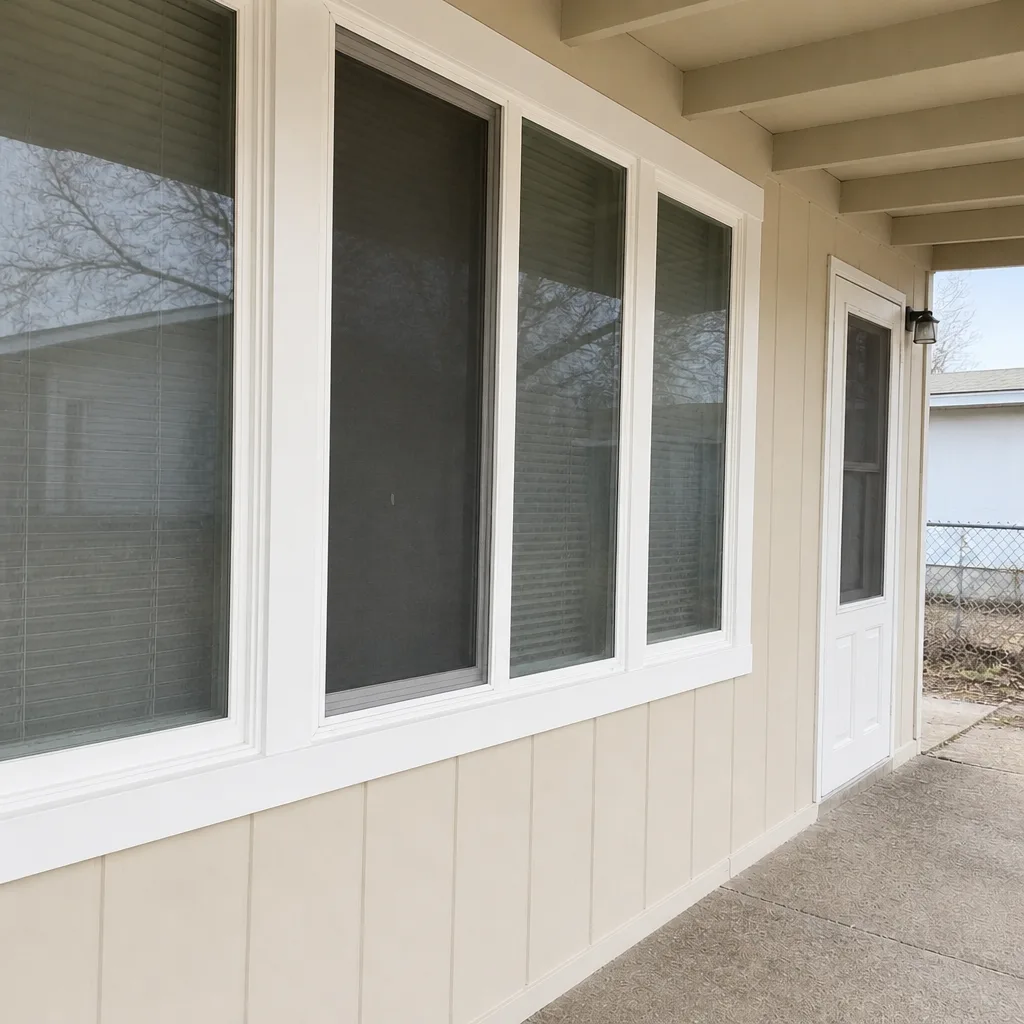 After
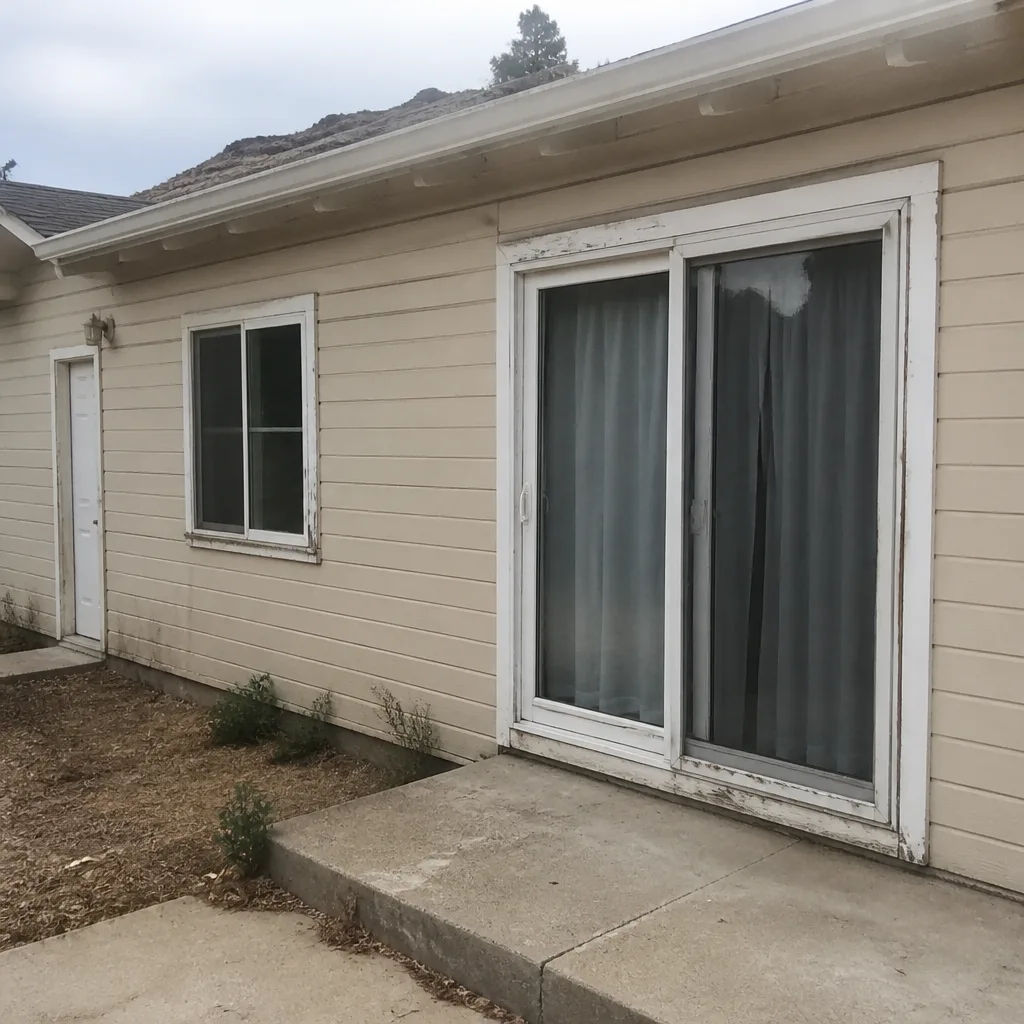 Before
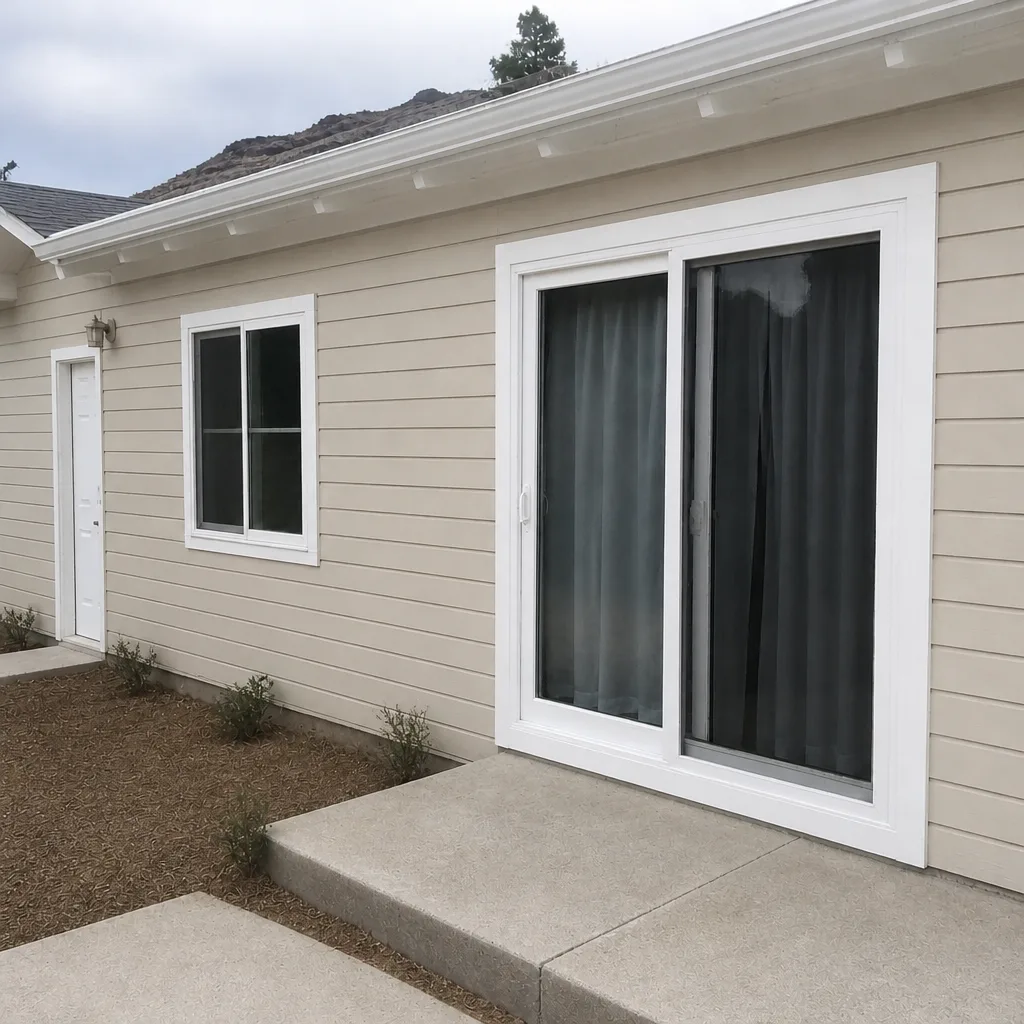 After
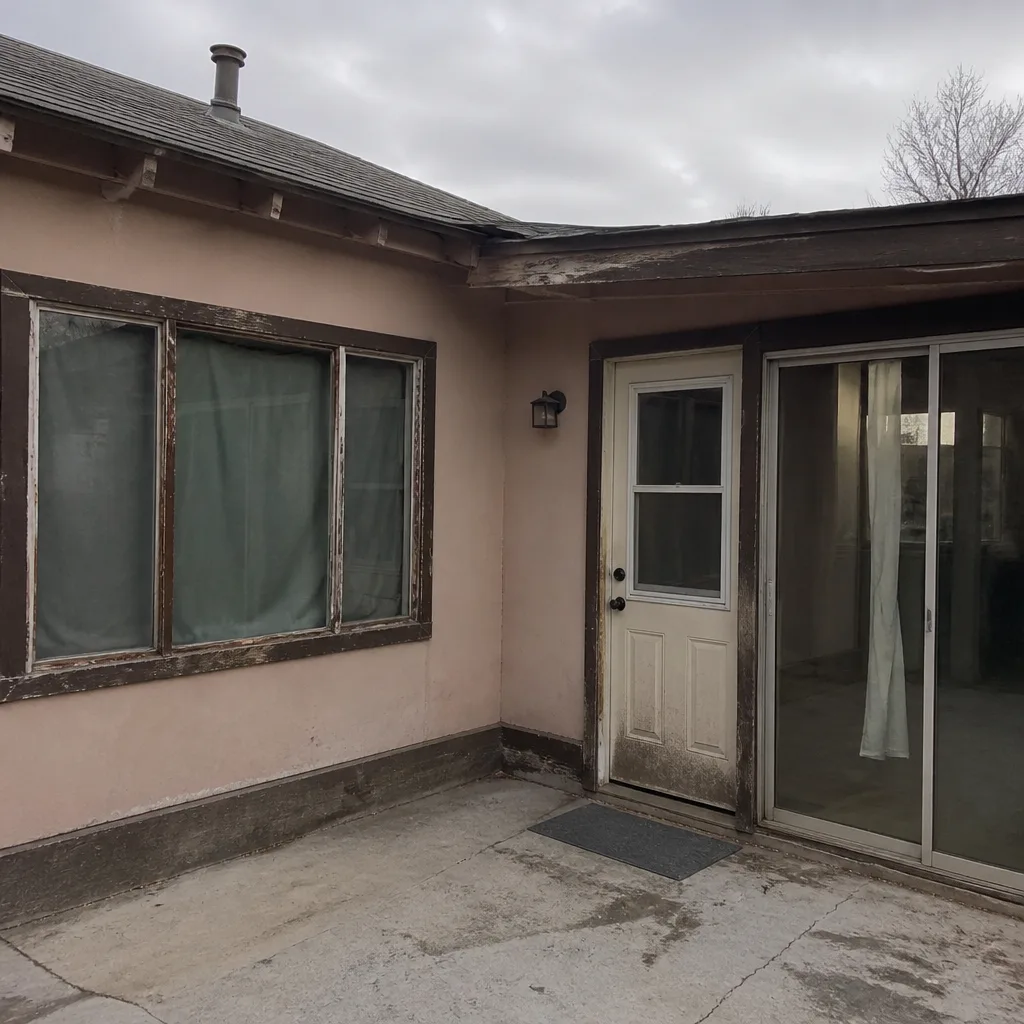 Before
 After
When to Call a Professional
Call a professional when a window or door fails any of the post-event checks: a sash that won’t latch, a frame joint that’s opened, weatherstripping that won’t seal, water that gets past a threshold, hardware that won’t align, or glass that’s fogged between panes. Also call if you’re not sure whether the damage is cosmetic or structural; a short professional assessment beats guessing, and it’s the difference between a small repair and a bigger one later. Enterprise Windows & Doors offers free estimates in Enterprise, and the written quote states the price clearly so there are no surprises. Call (877) 558-4821 to schedule an assessment. We answer 24/7. Fast dispatch from 7am to 7pm, Sunday through Friday, closed Saturdays.
Frequently Asked Questions
Within 24 hours of the event. That window catches abrasion and seal damage before the next dust storm compounds it, and it gives you a dated inspection record for any claim or warranty conversation. Run the inspection from the inside first, then check thresholds and exterior joints once the dust settles.
Hail is uncommon here, so it isn’t the main window-damage risk in Enterprise. Wind-driven dust and grit, and monsoon microburst water at thresholds, are the real local threats. If a storm does drop hail, diagnose any resulting damage in the same post-event inspection.
Pre-cut plywood or OSB panels, exterior-rated screws long enough to reach framing, heavy-duty plastic sheeting, exterior tape, a pry bar, drill, gloves, and a headlamp. On stucco walls, fasten into framing and seal the top edge so water sheds over your patch rather than behind the stucco.
Photograph each affected opening from wide, mid, and close-up angles, record the date and time of the event and your inspection, save any recoverable debris, and keep written repair quotes and invoices together. A written line-item quote from a licensed installer is the strongest documentation you can hand your insurer.
Permit requirements vary by jurisdiction and project scope, so ask your city’s building department whether your specific repair or replacement needs one. Keep the answer on file with your documentation. Emergency boarding is temporary protection; permanent repair is where the permit question comes in.
Yes. A failed seal lets heat in and conditioned air out, which turns a small inefficiency into a real heat-gain problem when the AC is off in peak summer. Closing blinds on sun-facing glass and sealing door gaps helps, but replacing a failed window seal is the durable fix.
The Bottom Line
Emergency prep for windows and doors in Enterprise comes down to knowing the real threats and checking for them on a schedule. Inspect within 24 hours of every haboob, check threshold seals and hardware before monsoon season, keep temporary sealing materials ready for stucco-clad openings, and document everything with dated photos. When you find damage, decide between repair and replacement based on the frame, glass unit, and hardware, not just the visible symptoms. A specialist who carries multiple brands can match the product to the problem, and a free written estimate tells you exactly what it costs to close the gap before the next storm does it for you.
Written by the team at Enterprise Windows & Doors.